Kami Vaniea

Kami Vaniea

Associate Professor
I am an Associate Professor at the University of Waterloo’s Department of Electrical and Computer Engineering (ECE) where I head the Technology Usability Lab in Privacy and Security (TULiPS). The goal of my research is to make security and privacy technologies more accessible for a wide range of users including end users, developers, and system administrators. I believe that technology should support people in their activities. My recent projects include topics like patch management, developer-centered privacy, phishing, online anonymity, smart speaker privacy, and privacy on social media.


There’s a (pot)hole in your privacy policy: Privacy Concerns in Canadian Problem-Reporting Websites

City governments are leveraging digital platforms to increase engagement from the community and make services more accessible to their constituents. These platforms allow citizens …

Indrani Ray
•
Sociotechnical Cybersecurity and Privacy (SCP) featured image

Sociotechnical Cybersecurity and Privacy (SCP)

Live blog of the Conference on Sociotechnical Cybersecurity and Privacy (SCP2026) which is a new conference this year created by merging EuroUSEC and STAST. The conference is being …

avatar
Kami Vaniea
•

Symposium on Usable Security and Privacy - Day 3

Liveblog of Day 2 of SOUPS, featuring sessions on: Usable Security Mechanisms & Emerging Threats; Scams, Fraud & Misinformation; GenAI Privacy & Risks; and ecurity Advice & …

avatar
Kami Vaniea
•

Symposium on Usable Privacy and Security (SOUPS 2026) - Day 2

Liveblog of Day 2 of SOUPS, featuring sessions on: Privacy Notices, Permissions & Labels; Security Operatoins & Practitioners; Phishing & Social Engineering; and At-Risk & …

avatar
Kami Vaniea
•

Symposium on Usable Privacy and Security (SOUPS 2026) - Day 1

Liveblog of Day 1 of SOUPS, featuring sessions on: Authentication * Credentials as well as Families & Shared Devices. The SOUPS community is made up of researchers that care about …

avatar
Kami Vaniea
•

SOUPS Workshop on Community on AI Research and Abuse (CARA)

Workshop of a range of experts on non-consentual intimate imagry. As always, the below is my interpretation of what people said, and should not be interpreted as a directly quote …

avatar
Kami Vaniea
•

Symposium on Access Control Models and Technologies (SACMAT'26)

I am live blogging Symposium on Access Control Models and Technologies (SACMAT'26) which is being hosted by the University of Waterloo this year. The below summaries are my …

avatar
Kami Vaniea
•

Composition of Access Control Schemes via Co-Existence: Three Case-Studies

We address composition of access control schemes which include both a model to encode authorizations, and an administrative model to encode the manner in which such authorizations …

Indrani Ray
•

AI-Enhanced Email Security: A Novel Pipeline for Phishing Campaign Detection and Profiling

In this study, we explore the integration of artificial intelligence (AI) into phishing (scam) mitigation, not as a replacement for human expertise but as a complement to it. We …

Tarini Saka
•
Common Referencing Errors featured image

Common Referencing Errors

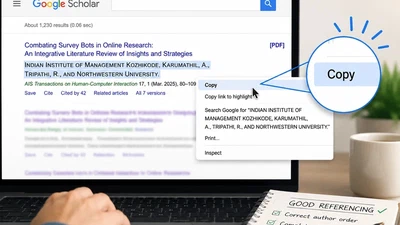
A set of recommendations around GenAI usage based on the citation review done for SOUPS 2026. Recommendations are aimed at labs that are trying to implement policies around GenAI …

avatar
Kami Vaniea
•
Security and Human Behavior 2026 Day 2 featured image

Security and Human Behavior 2026 Day 2

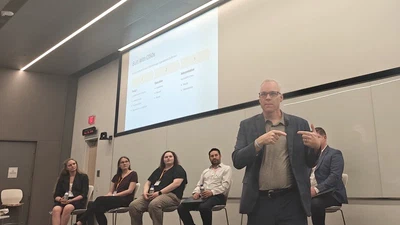
Live blog of the different SHB speakers on Day 1. SHB is an invite-only conference but the issues discussed are interesting and important to people world-wide. This live blog is …

avatar
Kami Vaniea
•
Security and Human Behavior 2026 Day 1 featured image

Security and Human Behavior 2026 Day 1

Live blog of the different SHB speakers on Day 1. SHB is an invite-only conference but the issues discussed are interesting and important to people world-wide. This live blog is …

avatar
Kami Vaniea
•
E-Government Engagement featured image

E-Government Engagement

Government services are increasingly moving online which can lead to more efficiency and greater accessability. But online services also come with privacy and security risks. This …

avatar
Kami Vaniea
•

Interview Study of Child Safety Engineers

The TULiPS lab is conducting a research study on the work practices of Online Child Safety Engineers, particularly people who work on mitigating Child Sexual Abuse Material through …

avatar
Kami Vaniea
•

Study

avatar
Kami Vaniea
•
Why do They Need to Know I Spotted a Pothole? Privacy Issues in  Canadian Municipal Problem Reporting Websites featured image

Why do They Need to Know I Spotted a Pothole? Privacy Issues in Canadian Municipal Problem Reporting Websites

Users act as valuable ``citizen sensors'' by reporting issues in public spaces enabling cities to address infrastructure problems in a timely manner. Municipal web sites are one …

Indrani Ray
•
Security and Human Behavior 2025 Day 2 featured image

Security and Human Behavior 2025 Day 2

Live blog of the different SHB speakers on Day 2. SHB is an invite-only conference but the issues discussed are interesting and important to people world-wide. This live blog is …

avatar
Kami Vaniea
•
Security and Human Behavior 2025 Day 1 featured image

Security and Human Behavior 2025 Day 1

Live blog of the different SHB speakers on Day 1. SHB is an invite-only conference but the issues discussed are interesting and important to people world-wide. This live blog is …

avatar
Kami Vaniea
•
SoK: Grouping Spam and Phishing Email Threats for Smarter Security featured image

SoK: Grouping Spam and Phishing Email Threats for Smarter Security

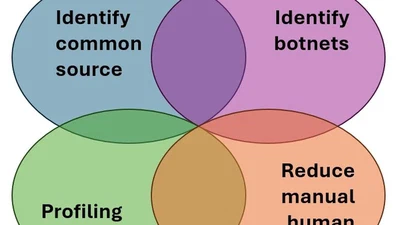
Clustering phishing and spam attackes into groups often called campaigns has been an ongoing research direction, but the work on it uses a supprisingly wide range of definitions of …

Tarini Saka
•
Judging Phishing Under Uncertainty: How Do Users Handle Inaccurate Automated Advice? featured image

Judging Phishing Under Uncertainty: How Do Users Handle Inaccurate Automated Advice?

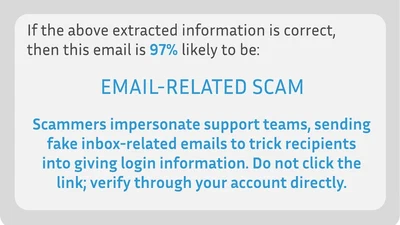
Users need accurate and relevant guidance about phishing to take the right action on specific cases. This study investigates the effectiveness of guidance based on features …

Tarini Saka
•

Writeup on Brian Krebs

Nice Wall Street Journal write up about Brian Krebs the cyber security investigative reporter. It has a couple of details about the Snowflake hack. But what I find most intersting …

avatar
Kami Vaniea
•

Maclean's: article on outages in 2025 (by me)

I authored a “year ahead” piece for Maclean’s magazine about what outages are likely to look like in 2025: More Frequent - and Disruptive - Tech Outages Are on the Way. Spoiler: I …

avatar
Kami Vaniea
•

Privacy, security, and consent (Talk)

Talk at the University of Waterloo Cybersecurity Privacy Institute 6th Annual Conference. The talk covers issues around how develoeprs are learning about what privacy entails and …

avatar
Kami Vaniea
•

NIST Password Guidance Draft seems sane

Password guidance has historically ignored human factors issues and required people to do things like changes passwords frequently which seems secure, but actually reduces security …

avatar
Kami Vaniea
•

PhishCoder: Efficient Extraction of Contextual Information from Phishing Emails

A novel framework designed to designed to extract contextual information from phishing emails. Our focus is on human-centric features, which are often overlooked in traditional …

Tarini Saka
•
Developer-centered privacy featured image

Developer-centered privacy

Developers are users too and they are impacted by many of the same usability issues that plague users. In this project we look at how developers engage with privacy and think about …

Mohammad Tahaei
•
PEDRO (PEt Decision suppoRt tOol) featured image

PEDRO (PEt Decision suppoRt tOol)

Website that explains different common privacy enhancing tools (PETs) and addresses common barriers and misconceptions people have when trying to use them.

avatar
Kami Vaniea
•

Phishing Codebook: A Structured Framework for the Characterization of Phishing Emails

There is a significant knowledge gap about the qualitative traits embedded in phishing emails, which could be useful in a range of phishing mitigation tasks. In this paper, we …

Tarini Saka
•

Crowdstrike Outage - thoughts about updates

Crowdstrike issued a problematic update that impacted about 8.5 million Windows computers sending them into a Blue Screen Of Death and taking down millions of vital systems …

avatar
Kami Vaniea
•

FTC Research Questions

The FTC has a list of Research Questions for academics that they are particularly interested in. At the top of the list is “AI-enabled Fraud and Scams”.

avatar
Kami Vaniea
•
Techreports with Security and Privacy Statistics featured image

Techreports with Security and Privacy Statistics

List of different sources of statistics that I use for research papers and presentations regarding security, privacy, and phishing.

avatar
Kami Vaniea
•

USEC Survey scales

Personal list of survey scales useful in Usable Security research. The list is not comprehensive and instead represents scales I have been exposed to or seen presented. General …

avatar
Kami Vaniea
•
CS4G Netsim as a teaching tool featured image

CS4G Netsim as a teaching tool

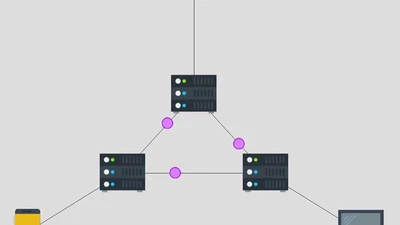
Network simlator that is intended for teaching purposes. I'm experimenting with using in in a classroom context.

avatar
Kami Vaniea
•

Security and Human Behavior (SHB) 2024 - Day 2

Interdisciplinary invite-only conference discussing how people interact with security technology. The conference is designed to share ideas, questions, and promote interesting …

avatar
Kami Vaniea
•

Security and Human Behavior (SHB) 2024 - Day 1

Interdisciplinary invite-only conference discussing how people interact with security technology. The conference is designed to share ideas, questions, and promote interesting …

avatar
Kami Vaniea
•
Not as easy as just update: Survey of System Administrators and Patching Behaviours featured image

Not as easy as just update: Survey of System Administrators and Patching Behaviours

While installing patches (updates) quickly is important for security, many system administrators do not have access to key resources like dedicated testing environments to ensure …

adam-jenkins
•

Using Clustering Algorithms to Automatically Identify Phishing Campaigns

Attackers attempt to create successful phishing campaigns by sending out trustworthy-looking emails with a range of variations, such as adding the recipient name in the subject …

kholoud-althobaiti
•

DarkDialogs: Automated detection of 10 dark patterns on cookie dialogs

Consent dialogs are in theory there to provide users with choices. In this study we look at the impact choosing different options has on the cookies set. We also analyze the number …

daniel-kirkman
•

Twitter has a Binary Privacy Setting, are Users Aware of How It Works?

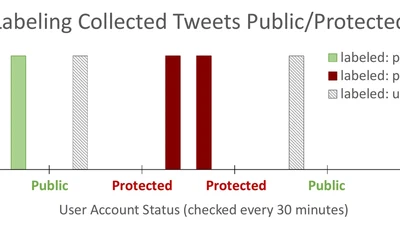
Twitter accounts are public by default, but Twitter gives the option to create protected accounts, where only approved followers can see their tweets. The publicly visible …

dilara-kekulluoglu
•

Multi-User Smart Speakers - A Narrative Review of Concerns and Problematic Interactions

Smart speakers in multi-user spaces, such as Amazon Echos, introduce risks to both owners and anyone sharing the space. They store voice recordings of user requests, and anyone in …

Nicole Meng-Schneider
•

"I didn't click": What users say when reporting phishing

When people report phishing emails they sometimes say something along with the report, such as asking a question, highlighting an aspect of the phishing, or asking for guidance. In …

nikolas-pilavakis
•

To Patch, or not To Patch? That is the Question: A Case Study of System Administrators' Online Collaborative Behaviour

Case study of a Critical Windows patch which had problems. The case explores how admins learn about patches, how issues are identified by online admin communities, communication …

adam-jenkins
•
Data-Enhanced Design: Engaging Designers in Exploratory Sensemaking with Multimodal Data featured image

Data-Enhanced Design: Engaging Designers in Exploratory Sensemaking with Multimodal Data

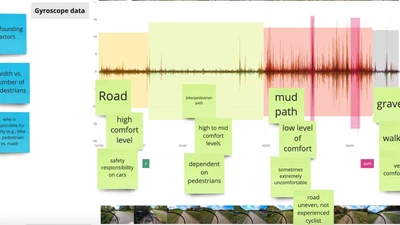
Research in the wild can reveal human behaviors, contexts, and needs around products that are difficult to observe in the lab. Telemetry data from the use of physical products can …

katerina-gorkovenko
•

Recruiting Participants with Programming Skills: A Comparison of Four Crowdsourcing Platforms and a CS Student Mailing List

Reliably recruiting participants with programming skills is an ongoing challenge for empirical studies involving software development technologies, often leading to the use of …

Mohammad Tahaei
•
Understanding Privacy Switching Behaviour on Twitter featured image

Understanding Privacy Switching Behaviour on Twitter

Changing a Twitter account's privacy setting between public and protected changes the visibility of past tweets. By inspecting the privacy setting of more than 100K Twitter users …

dilara-kekulluoglu
•
Smart Speaker Privacy featured image

Smart Speaker Privacy

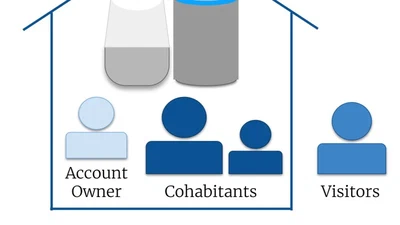
Smart speakers interact with anyone that is near them connecting that person to the accounts associated with the speaker's owner. Such access can cause privacy and expectation …

Nicole Meng-Schneider
•

Understanding Privacy-Related Advice on Stack Overflow

We look at the types of privacy-related advice developers give each other on StackOverflow and how that advice maps to Hoepman’s privacy design strategies. We qualitatively …

Mohammad Tahaei
•

Stay Home! Conducting Remote Usability Evaluations of Novel Real-World Authentication Systems Using Virtual Reality

Evaluating interactive systems often requires researchers to invite user study participants to the lab. However, corresponding evaluations often lack realism and participants are …

florian-mathis
•

Deciding on Personalized Ads: Nudging Developers About User Privacy

Choice framing impacts app developers’ decisions about the settings of mobile advertisements which in turn impacts their users’ privacy. We anticipate that framing and nudging have …

Mohammad Tahaei
•

Privacy Champions in Software Teams: Understanding Their Motivations, Strategies, and Challenges

Software development teams are responsible for making and implementing software design decisions that directly impact end-user privacy, a challenging task to do well. Privacy …

Mohammad Tahaei
•

I Don't Need an Expert! Making URL Phishing Features Human Comprehensible

Judging the safety of a URL is something that even security experts struggle to do accurately without additional information. In this work, we aim to make experts’ tools accessible …

kholoud-althobaiti
•
Virtual Reality Lab Studies featured image

Virtual Reality Lab Studies

Security studies, particularly those that use new or novel hardware, are challenging to study the usability of. This project looks at the feisability of studying such technologies …

florian-mathis
•
Twitter Privacy featured image

Twitter Privacy

Twitter has a relatively simplistic privacy setting of an account being either public or protected, yet many people are still confused about how the settings work. The project …

dilara-kekulluoglu
•
Phishing featured image

Phishing

Meta project for all the phishing research I do. The work spans topics like end-user education, URL reading ability, reporting phishing, and how administrators manage phishing.

avatar
Kami Vaniea
•

Owning and Sharing: Privacy Perceptions of Smart Speaker Users

Smart speakers, such as Amazon Alexa, are increasingly present in multi-user households leading to questions about privacy and consent espeically for those who do not directly own …

Nicole Meng-Schneider
•

"Developers are Responsible": What Ad Networks Tell Developers About Privacy

Avertising networks enable developers to create revenue, but using them potentially impacts user privacy and requires developers to make legal decisions. To understand what privacy …

Mohammad Tahaei
•
What is this URL's Destination? Empirical Evaluation of Users' URL Reading featured image

What is this URL's Destination? Empirical Evaluation of Users' URL Reading

Common anti-phishing advice tells users to mouse over links, look at the URL, and compare to the expected destination, implicitly assuming that they are able to read the URL. To …

sara-s.-albakry
•

Understanding Privacy-Related Questions on Stack Overflow

We analyse Stack Overflow to understand challenges and confusions developers face while dealing with privacy-related topics. Identified topics include privacy policies, privacy …

Mohammad Tahaei
•
Analysis of publicly available anti-phishing webpages: contradicting information, lack of concrete advice and very narrow attack vector featured image

Analysis of publicly available anti-phishing webpages: contradicting information, lack of concrete advice and very narrow attack vector

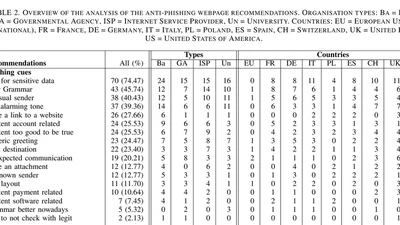
Organizations often provide anti-phishing guidance to their customers and the Internet community at large. We analyzed 94 anti-phishing webpages from eight different countries and …

mattia-mossano
•

Analysing Privacy Leakage of Life Events on Twitter

People share a wide variety of information on Twitter, including the events in their lives, without understanding the size of their audience. While some of these events can be …

dilara-kekulluoglu
•

A Survey on Developer-Centred Security

Software developers are key players in the security ecosystem as they produce code that runs on millions of devices. Yet we continue to see insecure code being developed and …

Mohammad Tahaei
•

Chatty Factories

Design project aimed at exploring the "fourth industrial revolution" by bringing data, artificial intelligence and robotic fabrication systems to the forefront of the manufacturing …

avatar
Kami Vaniea
•

A Review of Human-and Computer-Facing URL Phishing Features

kholoud-althobaiti
•

Permission Impossible: Teaching Firewall Configuration in a Game Environment

Topics in Computer Security, such as firewalls, can seem inaccessible or very difficult to beginners. That perceived inaccessibility is a serious problem at a time when countries …

sibylle-sehl
•
Faheem: Explaining URLs to people using a Slack bot featured image

Faheem: Explaining URLs to people using a Slack bot

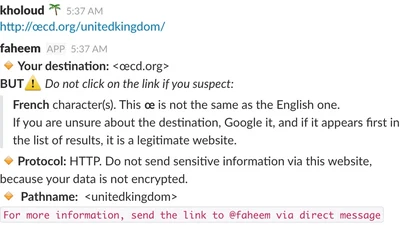
Online safety regularly depends on users’ ability to know either where a URL is likely to lead or identify when they are on a site other than they expect. Unfortunately, the …

kholoud-althobaiti
•

Tales of Software Updates: The process of updating software

Analysis of the update experiences of 307 survey participants to better understand the barriers and incentives people experience when updating software. Using content analysis we …

avatar
Kami Vaniea
•

Debunking security-usability tradeoff myths

m-angela-sasse
•

Access Control for Home Data Sharing: Attitudes, Needs and Practices

As digital content becomes more prevalent in the home, nontechnical users are increasingly interested in sharing that content with others and accessing it from multiple devices. …

michelle-l.-mazurek
•

Evaluating Assistance of Natural Language Policy Authoring

The goal of the research study reported here was to investigate policy authors' ability to take descriptions of changes to policy situations and author high-quality, complete …

avatar
Kami Vaniea
•

Access Control Policy Analysis and Visualization Tools for Security Professionals

Managing large sets of access-control rules is a complex task for security administrators. Each addition, deletion or modification of a rule causes many potential and unknown side …

avatar
Kami Vaniea
•